
BEHIND THE NOVEL
A PAINTER’S LONDON:
The World of Clouded in Clerkenwell
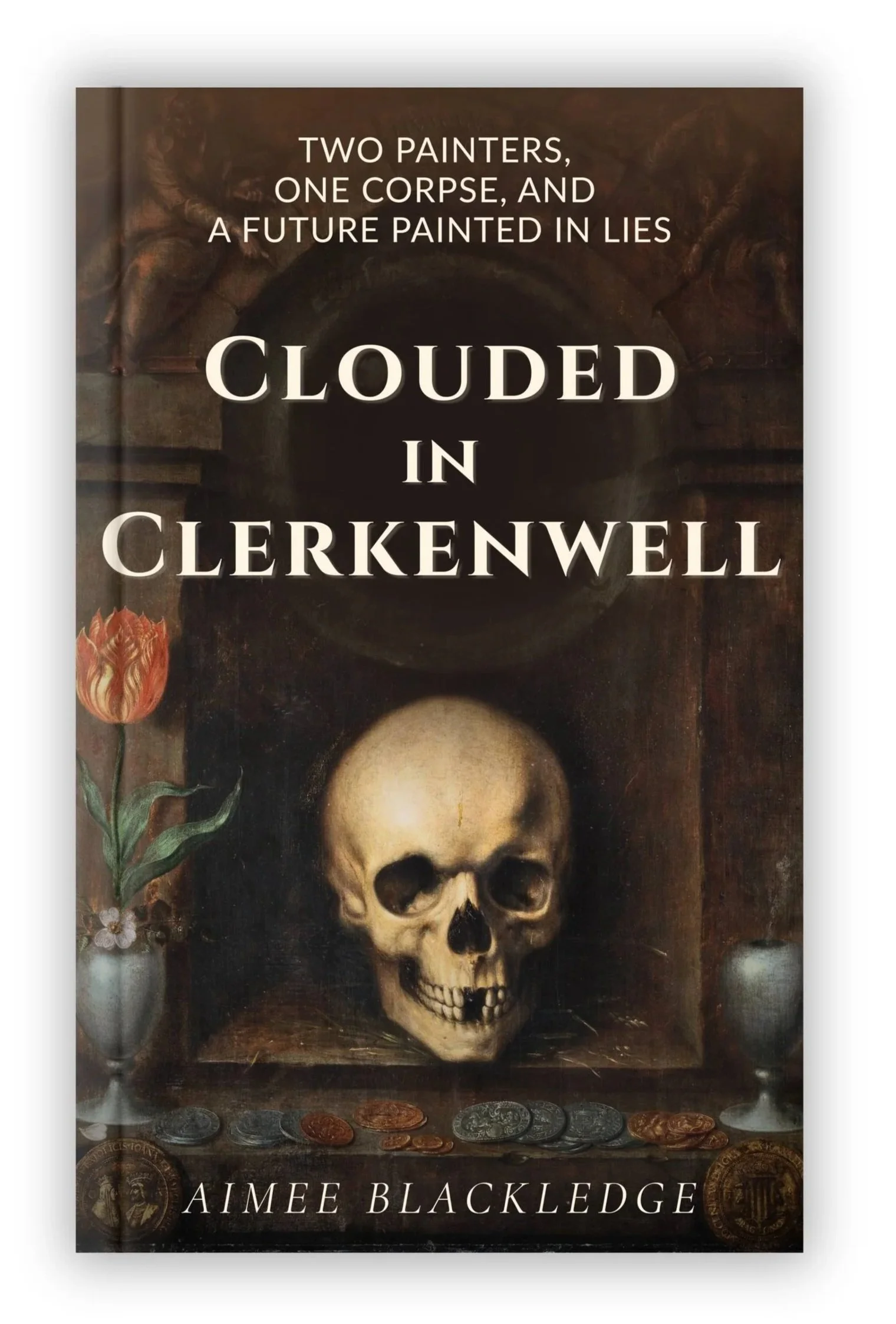
Welcome to the shadows of seventeenth-century London. Clouded in Clerkenwell begins in the biting winter cold of December 1641, as the Thames is frozen over and the country is poised on the edge of a bloody civil war. At the dark lip of the swollen River Fleet, a painter’s apprentice frantically casts away lavish jewellery belonging to a dead man, as fast as his hands will let him.
What follows is a four-week scramble to run a fraudulent studio, secure royal favour, and outmanoeuvre the hangman’s reach.
Before you meet him, let me show you the London he's standing in.
SECTION ONE
Life as an English Painter
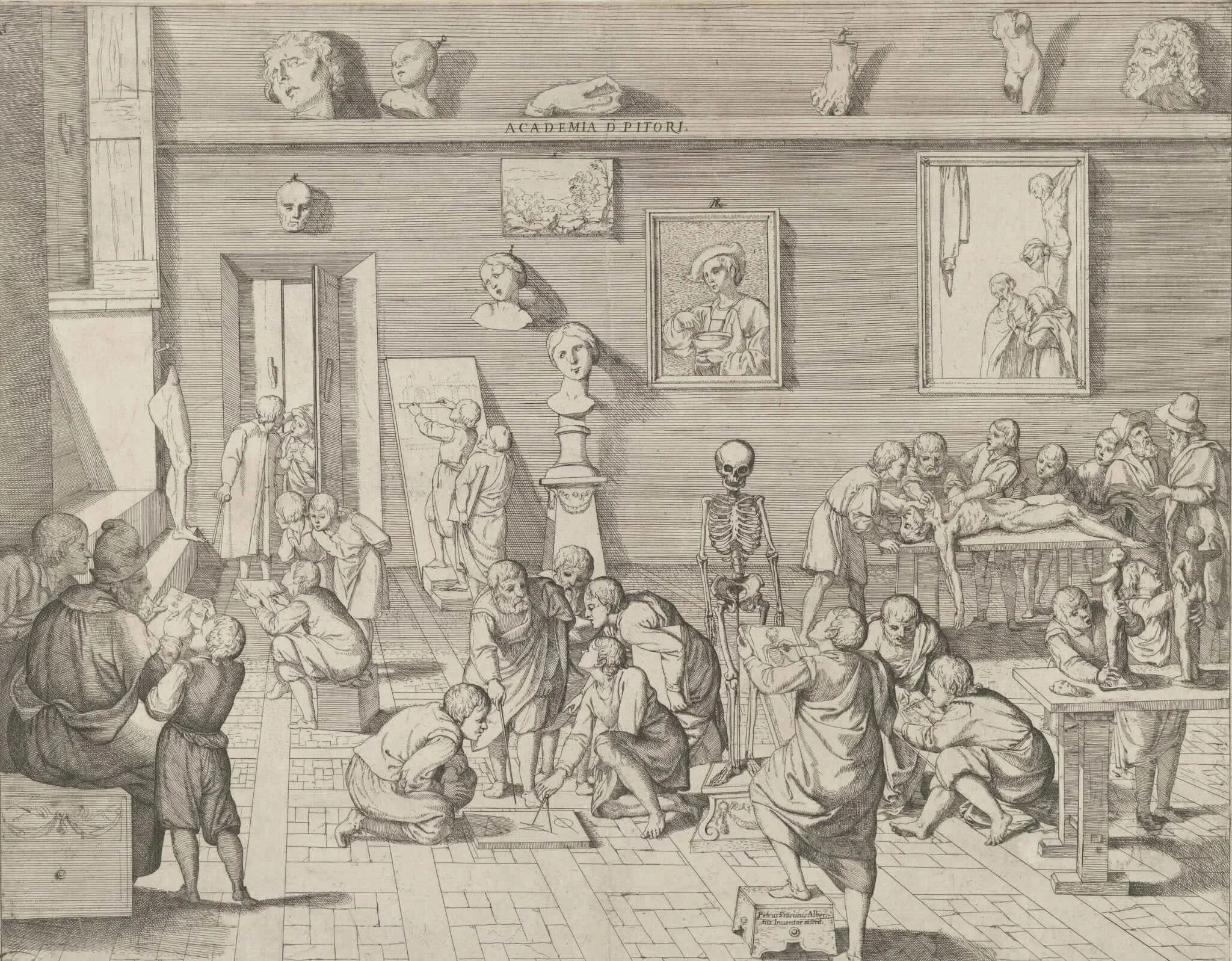
Pierfrancesco Alberti, An Academy of Painters, 1600–38. Etching, 41.2 x 52.2 cm., The Metropolitan Museum of Art. https://www.metmuseum.org/art/collection/search/369583
In London, during 1641, if you wanted to commission a masterpiece, you did not commission an English painter. You hired a stranger painter.
That was the term for Dutch, Flemish and Italian masters who had trained in the great continental academies, and who settled in England. Educated at art academies such as the Accademia di San Luca in Rome, these artists arrived in London with refined technical skills.
Their curriculum included copying after classical sculptures from antiquity, drawing from life and studying human corpses and skeletons to learn anatomy. They arrived in London with skills no English painter could match, and they took every commission worth having. England, by contrast, remained artistically isolated, lacking a formal Royal Academy until 1768, nearly 128 years later.
English painters, especially those working under the Worshipful Company of Painter-Stainers, resented them bitterly.
Clouded in Clerkenwell lives inside that resentment. Antonis van Laken is a Dutch face painter with a gift and no legitimate standing. Henry Kentridge is a West Country apprentice who can grind a colour and forge a signature but will never, as an Englishman, be allowed a career at court. One of them has the talent. The other was born in the right place. Neither has any money, and their master, whose fall from royal favour has left the studio in a precarious position with mounting debts.
All of this alters when a fateful studio accident changes the course of their lives.
Now they must work together to survive.
SECTION TWO
The Vacuum of Anthony Van Dyck’s Death
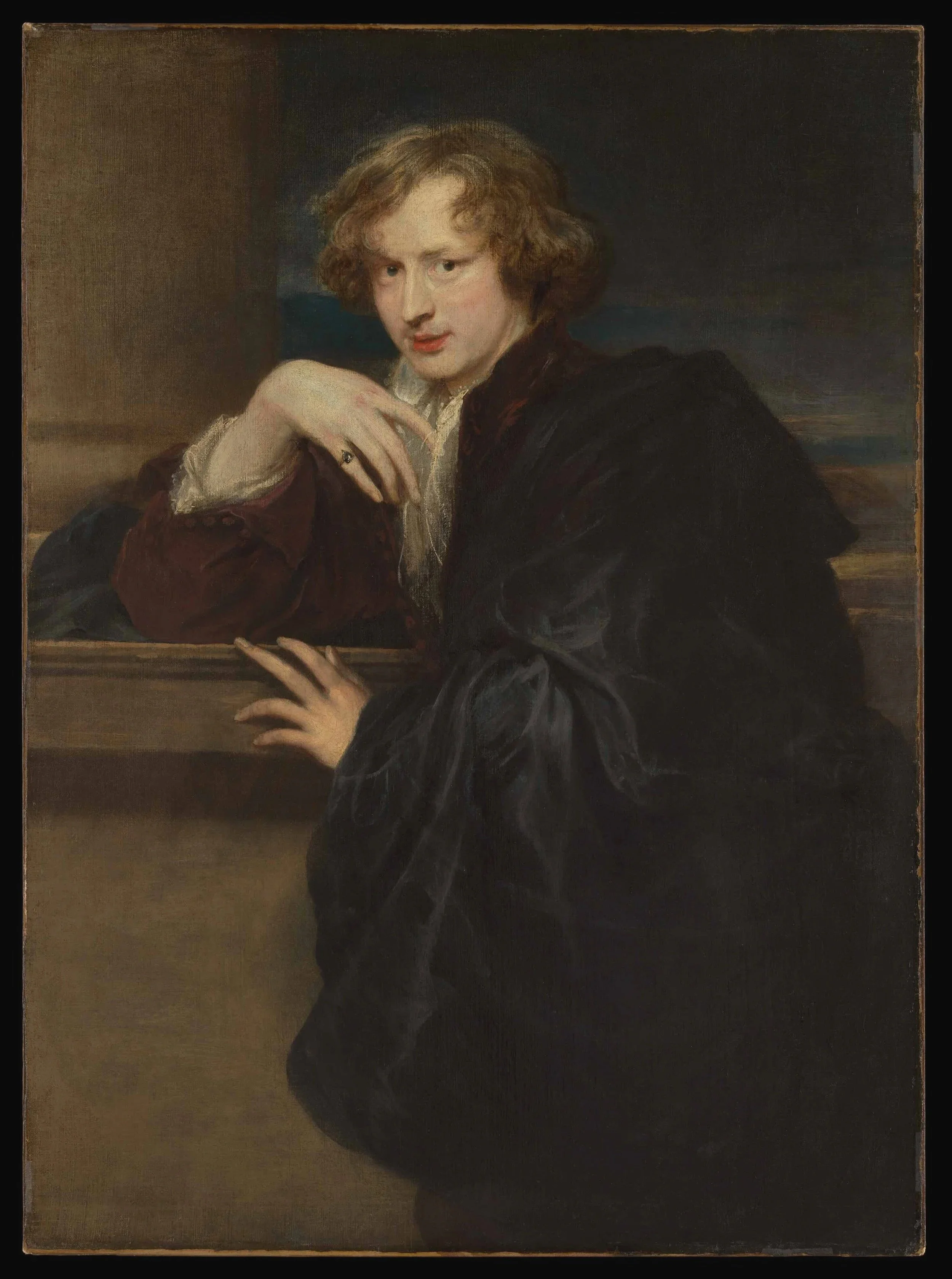
Anthony Van Dyck, Self-Portrait, 1620-21. Oil on canvas, 119.7 x 87.9 cm, The Metropolitan Museum of Art. https://www.metmuseum.org/art/collection/search/436258
On 9 December 1641, Sir Anthony van Dyck died at forty-two, and every ambitious painter in London recognised the vacuum he left behind.
No stranger painter was more successful than Sir Anthony van Dyck. Charles I granted him a magnificent studio at Blackfriars, a generous pension and the title of Principal Painter in Ordinary to His Majesty. The king even built a private stone causeway on the Thames so he could regularly visit the Flemish painter’s studio.
Van Dyck completely transformed English portraiture with his characteristic elongated figures and luminous fabrics. He had not merely painted the English court; he had invented how it wished to see itself. Van Dyck gave England elongated grace, luminous satin, the fluid breath of the Baroque. Before Van Dyck, painters had been perceived as skilled craftspeople rather than high-status individuals or creative geniuses. Van Dyck was the first artist in Britain to achieve celebrity-like status.
And then, in the space of a single winter week, he was gone, and the most lucrative position in the country was suddenly, dangerously vacant.
This is where Clouded in Clerkenwell begins. Van Dyck's death is the starting gun. Across the city, brilliant assistants and desperate studio masters realise the same thing at the same moment: the stage is empty, and it will go to whoever is boldest, best-connected, or most willing to lie. Henry and Antonis have no connections and no scruples left to spare. What they have is a fraudulent studio, a concealed body, and four weeks to reach the King before anyone reaches the truth.
SECTION THREE
A Painter’s Hand and Eye
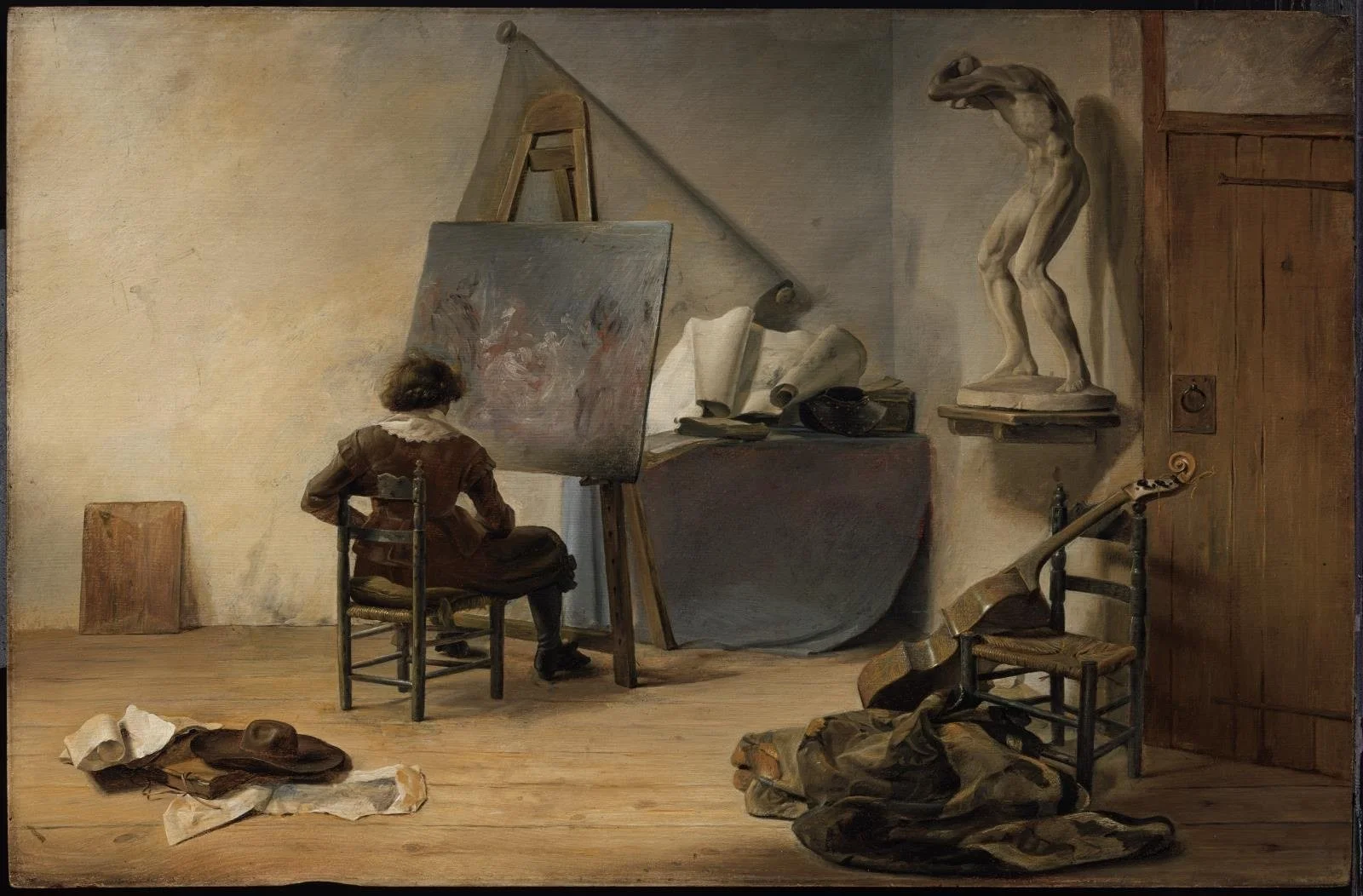
Forget the idea of the lonely creative genius in his moody garret. A seventeenth-century studio was a loud, bustling, foul-smelling, faintly poisonous factory, and everyone in it had a role.
The word portrait was not yet used during this period; instead, one would have a likeness made. Painting likenesses was the ultimate commercial backbone of the studio. A face painter usually painted your likeness in a strictly prescribed manner as part of a collaborative endeavour. In fact, the master rarely executed a canvas alone; instead, labour was fiercely divided :
1. Apprentices: Ground colours, stretched canvas, and prepared grounds.
2. Studio Assistants: Laid down a monochrome ‘dead-colouring’ as an underlayer, sketched the overall compositions and painted drapery.
3. Collaborators: Were independent painters who specialised in landscape backgrounds or animals. These were more common on the continent.
4. Studio Master: Swept in for the final process to paint the face and often the hands. Or sometimes, they simply provided the final touches and flourishes. Paintings were considered theirs because the whole process was overseen by them.
For a provincial English apprentice like Henry, a small studio meant zero time to actually develop an artistic voice. In addition to his studio duties, he was running the domestic household, cooking the meals, and balancing the deceptive ledgers.
As an apprentice, Henry grinds the colours, and the colours sometimes fight back. White lead is chalky and faintly sweet, and stiffens his hands by evening; it can poison a man slowly, over years. Vermilion stains the creases of his knuckles arterial red and does not wash out for weeks. Smalt drags under the grinding stone; red lake surrenders like silk.
Henry sees the whole world in pigment, in light, in what a colour costs and what it hides. It is how he survives what he does. When he grinds pigments, his hands know the motion already; he has been grinding colour most of his life. And he knows that the studio is where darkness is mixed.
Jan Davidsz. de Heem, Interior of a Painter's Studio, 1630. Oil on panel, 58 × 81 cm, Boston Museum of Fine Arts, 2020.407. https://collections.mfa.org/objects/692550/interior-of-a-painters-studio
SECTION FOUR
Bodies & Medicine
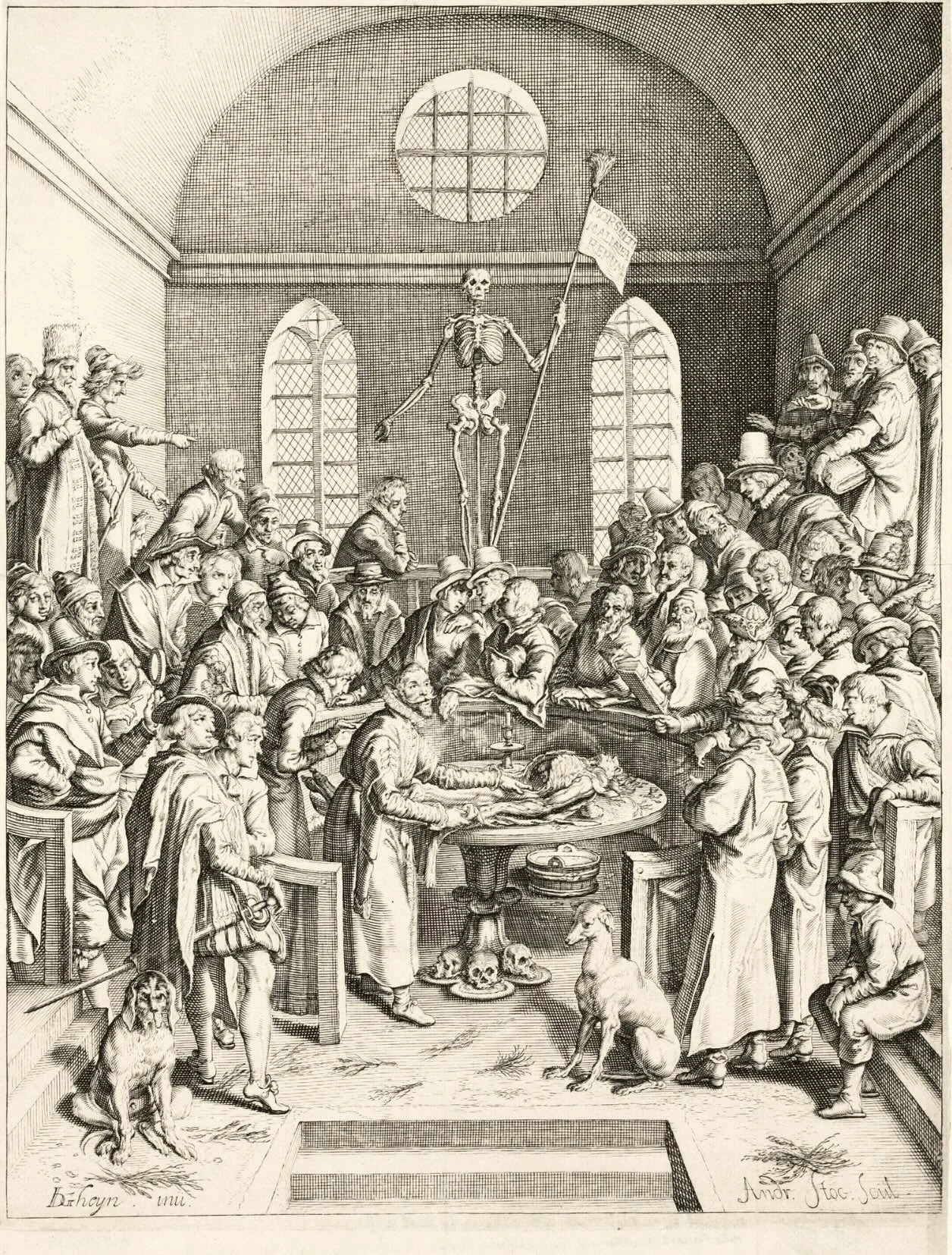
Jacques de Gheyn II, The Anatomical Lesson of Professor Pauw, 1615. Engraving, 28.5 × 22.1 cm., Chicago Institute of Art,
1944.490. https://www.artic.edu/artworks/51094/the-anatomical-lesson-of-professor-pauw
In 1641, the line between the physician and the murderer was thinner than anyone liked to admit, and it ran straight through the apothecary's shelf.
The same plant that eased a patient could empty a womb or stop a heart, and only the dose told them apart. Hellebore, black, green, or stinking, sat in the great melancholy cures of the age and on the frontispiece of the century's most famous book on madness.
A barber-surgeon might bleed you on Monday and, on Tuesday, pay quietly for a fresh corpse to open. Bodies were currency. Anatomy was scandal and spectacle both. And a clever, ruined man who knew his physic was one of the most dangerous people in the city.
The novel has such a man in it, and I will not tell you what he does with him.
What I will tell you is that Clouded in Clerkenwell takes the real medicine of its age seriously, the theriac, the hellebore, the surgeon's saw, and asks a question it refuses to answer cleanly: when survival requires a small, deniable cruelty, and no one will ever be able to prove it happened, does the guilt still count? Henry spends the book trying not to answer that. But I suspect you will.
SECTION FIVE
A City in Chaos
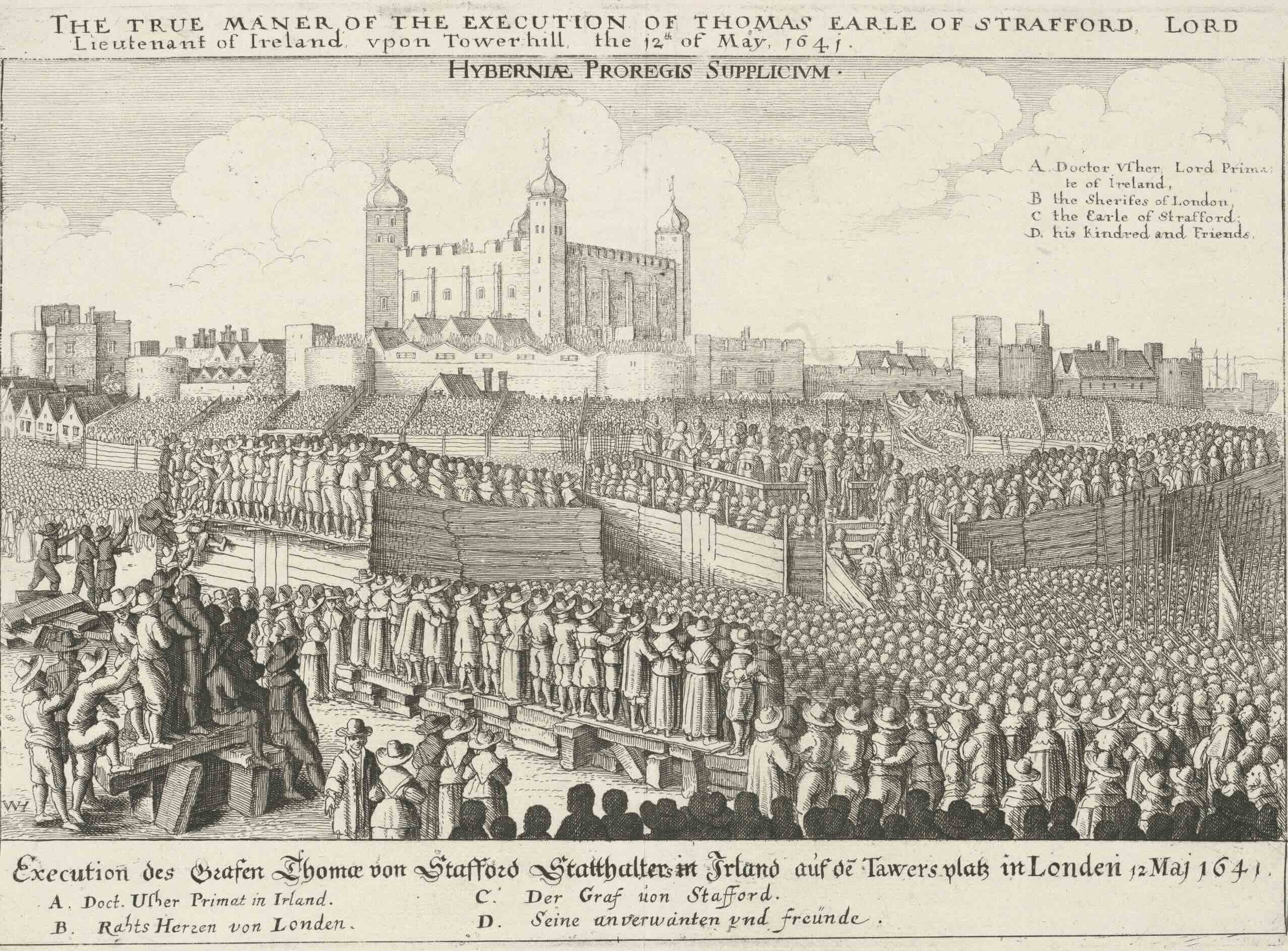
Wenceslaus Hollar, The true maner [manner] of the execution of Thomas Earle of Strafford, 1641. Etching, plate: 18.6 × 26.4 cm., Metropolitan Museum of Art, object number: 17.3.3280.https://www.metmuseum.org/art/collection/search/360634
All of this happens in a city about to tear itself in half.
December 1641 is the last held breath before the English Civil War. The King's authority is collapsing, Parliament is in open revolt, the apprentices are rioting at Westminster, and within a month Charles will flee his own capital and never rule it in peace again. Ordinary Londoners went about their business through all of it — buying bread, cheating each other, falling in love — half-noticing that the ground was opening under their feet.
That is the London of Clouded in Clerkenwell: freezing, filthy, funny, and doomed, with two painters at the centre of it who are so consumed by their own scramble to survive that they barely register the country ending around them.
It is a darkly comic novel of ambition, deception, and the particular mercy of a well-placed lie. It begins at the edge of the Fleet, with a dead man's jewels going into the water — and it does not let go.