
Clouded in Clerkenwell
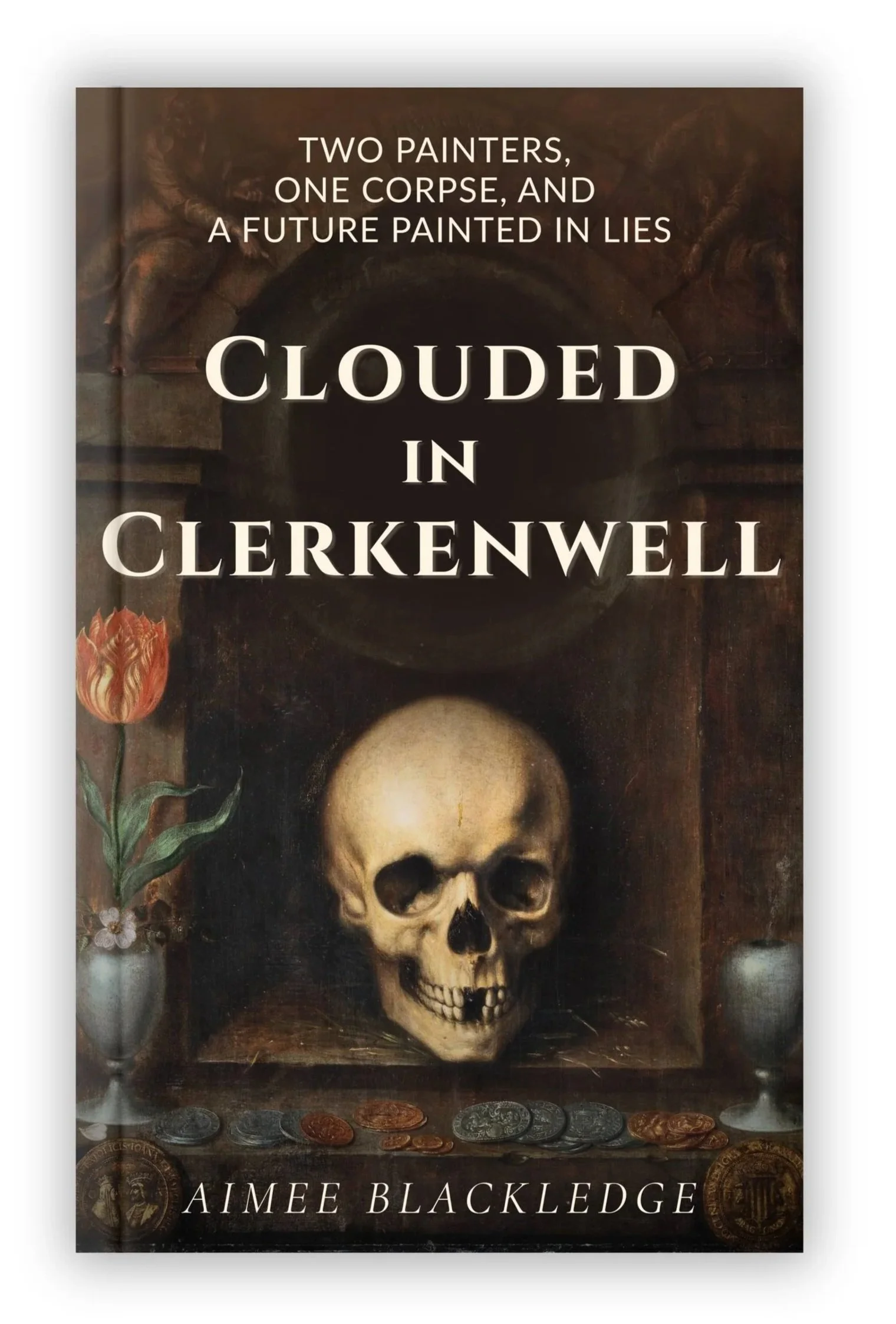
London, 1641. When their master dies in an accident, two ambitious painters conceal the body and seize the studio. Apprentice Henry Kentridge wants to open his own studio in Exeter; his fellow assistant Antonis wants something grander and far more dangerous.
Between them stands a disgraced anatomist who asks too many questions, a widow with designs of her own, and a country sliding toward civil war.
For readers who love the dark comedy and inseparable duo of Ferdia Lennon's Glorious Exploits and the buried-body dread of Donna Tartt's The Secret History.
A dark comedic novel about ambition, deception, and the small lies that build a life.
CLOUDED IN CLERKENWELL
CHAPTER ONE
Evening of 9th December 1641 · Clerkenwell, the River Fleet
Three trinkets lay glinting in Henry’s palm: a pearl earring, an onyx signet ring with a tulip carved in miniature, and a cameo of Sisyphus pushing his rock. An emptiness lurched in his gut as he stepped onto the moonlit St John’s Square.
Leave it to that man to own such lavish jewels. Casting them away would be risky. But keeping them would be more dangerous. They connected Henry to the accident and to the agreement, and that was enough to ruin everyone, so they had to be sacrificed to get shut of their owner. If he sold them, his family could eat for another year. But if his plan succeeded, they would never go hungry again.
A fierce wind whipped through Clerkenwell’s streets, slapping Henry’s cheeks numb and blurring his vision with tears. Whether they were from cold or fear, he could no longer tell the difference. With his fists shoved under his cloak and into his armpits, he hurried toward the riverbank. The seam of his breeches sawed his thighs raw as his breath clouded before him. His pace halted as he stumbled into an ice-filled pothole and then resumed and redoubled.
He gripped the treasures until the signet's edge bit into his palm. Five years had passed since he had arrived in London to become a painter's apprentice, long enough to learn that hope was an absurd luxury he could not afford. Tonight the whole of his future balanced on a scale between the prosperous life he craved and the gallows. Henry stopped himself from envisioning a scene of Nell being told about his execution and Benjamin growing up fatherless.
On the corner of Chick Lane, the Red Lion Tavern loomed ahead. Amber light spilt onto the frozen street as shouts and laughter crashed through the night. A savoury waft of sausages and roasted meats made him slobber and swallow hard. How in hell could he be hungry at a time like this?
Thieves used the tavern’s hidden trapdoors to discard their more troublesome spoils into the River Fleet below, but Henry could not risk being seen tonight. Instead, he skirted along the river’s western bank. Two men stood with their backs to him, pissing on either side of the tavern’s entrance, their long, grotesque shadows flickering in unison with the torchlights. Head down, Henry passed them unnoticed and stepped from the road onto the bank, where the snow lay thick as mounds of freshly ground white lead.
He followed in the footprints of someone with a wide stride, until the trail halted. Then Henry saw why. The previous man had squatted to shit, smearing an otherwise unspoiled canvas. The stink of it reached him, and with it, the unbidden voice of a man he had not heard in seven years. When the stench of bowels stings the nose, it’s already too late. Henry had been ten, running across the road toward his trampled father, when a stranger caught him by the collar and would not let him look. He had not understood the words then, but he did now. Henry strode wide of it into fresh snow, and he took it as a sign. This was where Clerkenwell came to purge unwanted and foul things.
At the water’s edge, he glanced over both shoulders. Alone, blessedly alone. The reek of pig filth rose from the swollen black river. He peered into the churning flow, searching for the strongest current, the deepest channel. The last thing he wanted was for eager scroungers to fish the damning treasures out of the shallows come morning.
Like a greenhorn cutpurse, Henry trembled as he opened his fist. The jewellery caught the dull light one last time. He whipped his arm forward, and the river swallowed them whole. A single splosh echoed back, and they were gone.
Henry scrambled back toward the street. His apprenticeship was over. For the first time since moving to London, he felt something like relief.
He walked the deserted streets back to No. 9 St John’s Square. Snow began to fall, settling over Clerkenwell like a fresh ground laid across an old panel, burying whatever the surface had once been.
❦
CONTINUE READING
Sign up, and I’ll send you chapters two and three, along with The Period Eye, my monthly newsletter from behind the scenes of the dark and strange world of seventeenth-century Clerkenwell.
ABOUT THE NOVEL

In 1641, London’s painters were divided between native painters who worked under the Painter-Stainers' Guild on one side and the stranger painters, born abroad, who dominated royal patronage, on the other. Clouded in Clerkenwell follows two such painters, bound to the same master and to each other.
Henry Kentridge is a seventeen-year-old apprentice, sending his wages home to a wife and son he barely knows. Antonis van Laken, a gifted Dutchman who once worked under Rembrandt, is trapped in the service of a master he despises. When the court’s favourite painter, Anthony van Dyck, dies suddenly, the commissions he leaves behind could make either man’s name, if their master would only allow them to reach for it.
Then a studio accident presents a once-in-a-lifetime opportunity. Henry and Antonis are left with a choice: tell the truth, or bury it, take the studio for themselves, and lie their way to the fame and fortune they think they deserve. Each lie becomes easier to tell. What those lies will cost them hasn’t been counted yet.
Clouded in Clerkenwell is a novel about ambition, complicity, and the things we talk ourselves into.
Step into the world behind the novel: the pigment, the poison, and the painters of 1641.
Join The Period Eye
Letters from a darker, stranger seventeenth century.
Once a month, I write from inside the world of Clouded in Clerkenwell. Explore a poison hidden in a paint box, a real anatomist and what he did next door, and the city on the eve of a war it didn't see coming.
Join, and I'll send you chapters two and three of Clouded in Clerkenwell to begin, then a letter each month. Subscribers are the first to know when the book is ready to read in full.
FIRST IN A SERIES
Clouded in Clerkenwell is the first novel in a planned series following Henry Kentridge and Antonis van Laken through the upheavals of the English Civil War, the Interregnum, and the Restoration.
Each novel stands alone; together they trace two painters' attempt to survive a century of upheaval, on their own terms.
ABOUT THE AUTHOR

Aimee Blackledge writes darkly comedic historical fiction set in Early Modern Europe. As an art historian (DPhil, Oxford), she came to the period through doctoral research on painters and their material world.
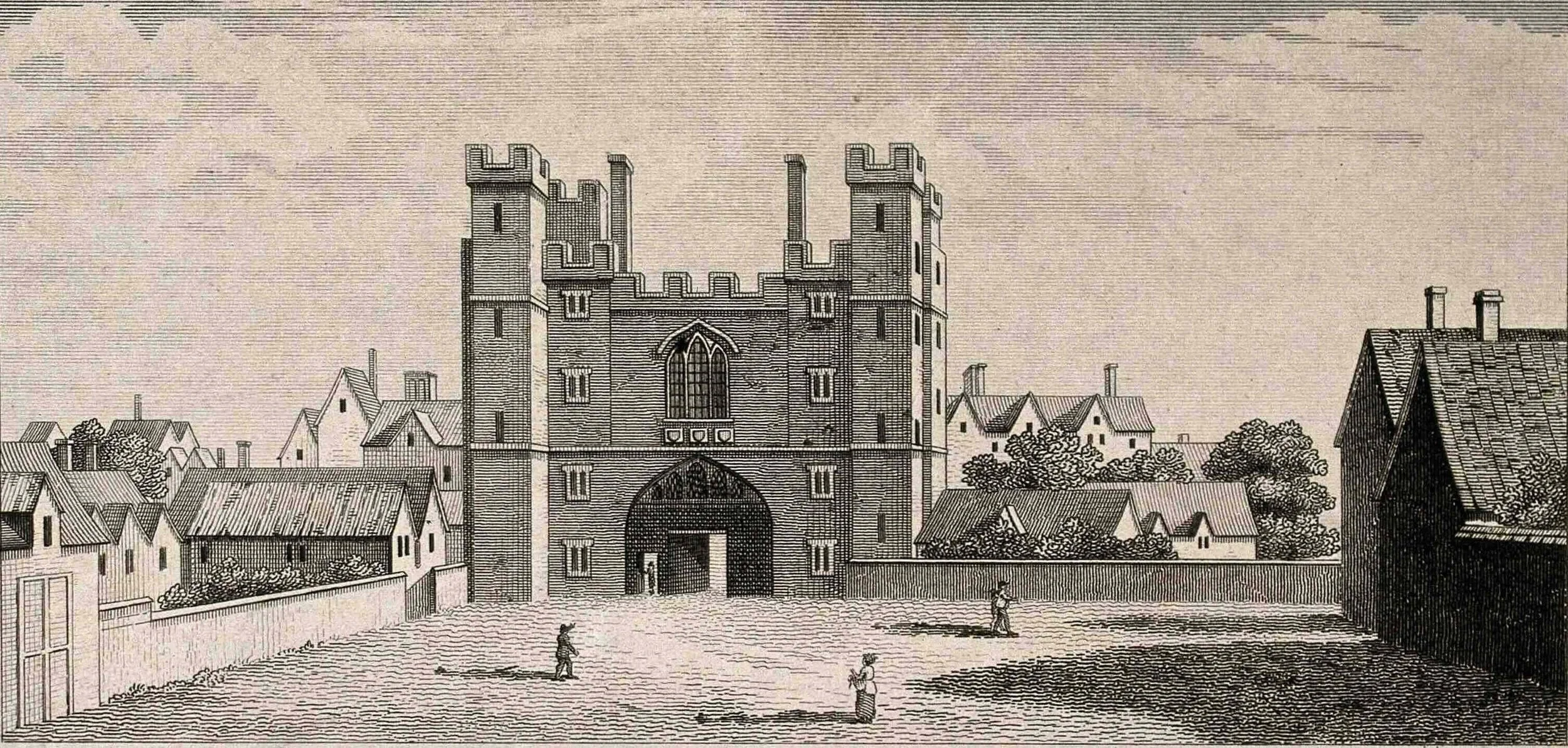
Banner Image: Detail from Wenceslaus Hollar, Gate of the Hospital of the Knights of St. John of Jerusalem, Clerkenwell, London, 1661. Engraving, 6.2 x 11.7 cm. The Wellcome Collection.