
Stranger Painters: English Painters and Their Competition in 1640s London
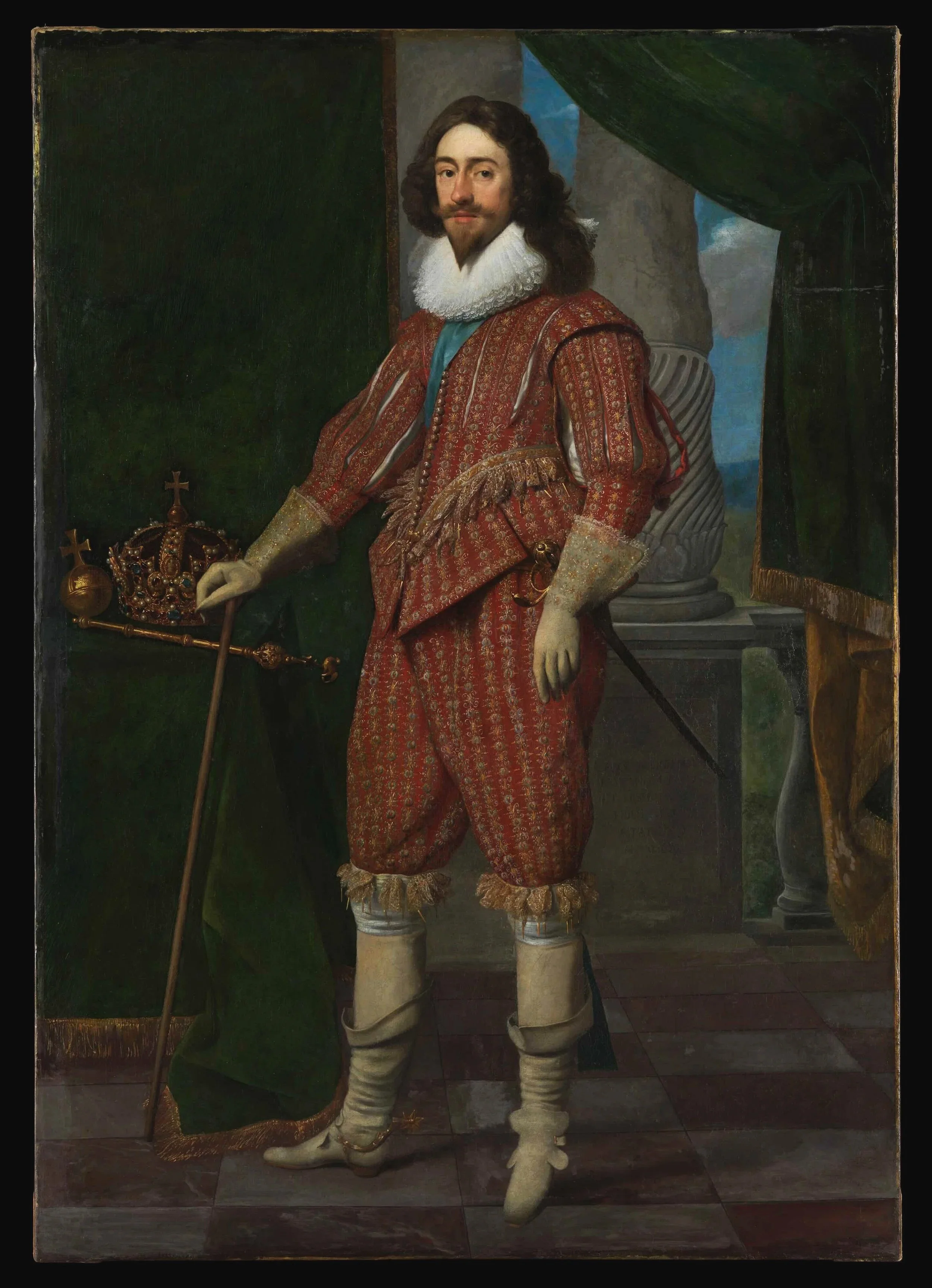
Daniël Mijtens, Charles I (1600–1649), King of England, 1629. Oil on canvas, 200.3 x 140.7 cm., Metropolitan Museum of Art, Object Number: 06.1289.
Here is a reality at the heart of my novel.
In 1641, if you were an English painter, the most lucrative work in the country was painting faces, or what we call portrait painting today. But this genre, which culminated in portraits of the King, his court, and other great commissions, was effectively closed to native painters. Charles I and his circle preferred Dutch, Flemish, and Italian masters who had trained in continental academies. Their training included studying anatomy from real corpses, drawing from antique sculptures and drawing after life, usually nude (see image below). This curriculum could not be matched by the apprenticeship system of English guilds. English painters would have to wait another 127 years for their own Royal Academy to offer such training opportunities.
Immigrant painters who came to England to serve the court were known as ‘stranger painters’, ‘stranger’ being the period's term for a foreigner. Many stayed permanently, some gained citizenship, while others eventually returned to the continent. In 1641, it didn’t matter how talented you might become as an English painter; you were judged for your lack of training and familiarity with the old masters of the Renaissance and classical antiquity.
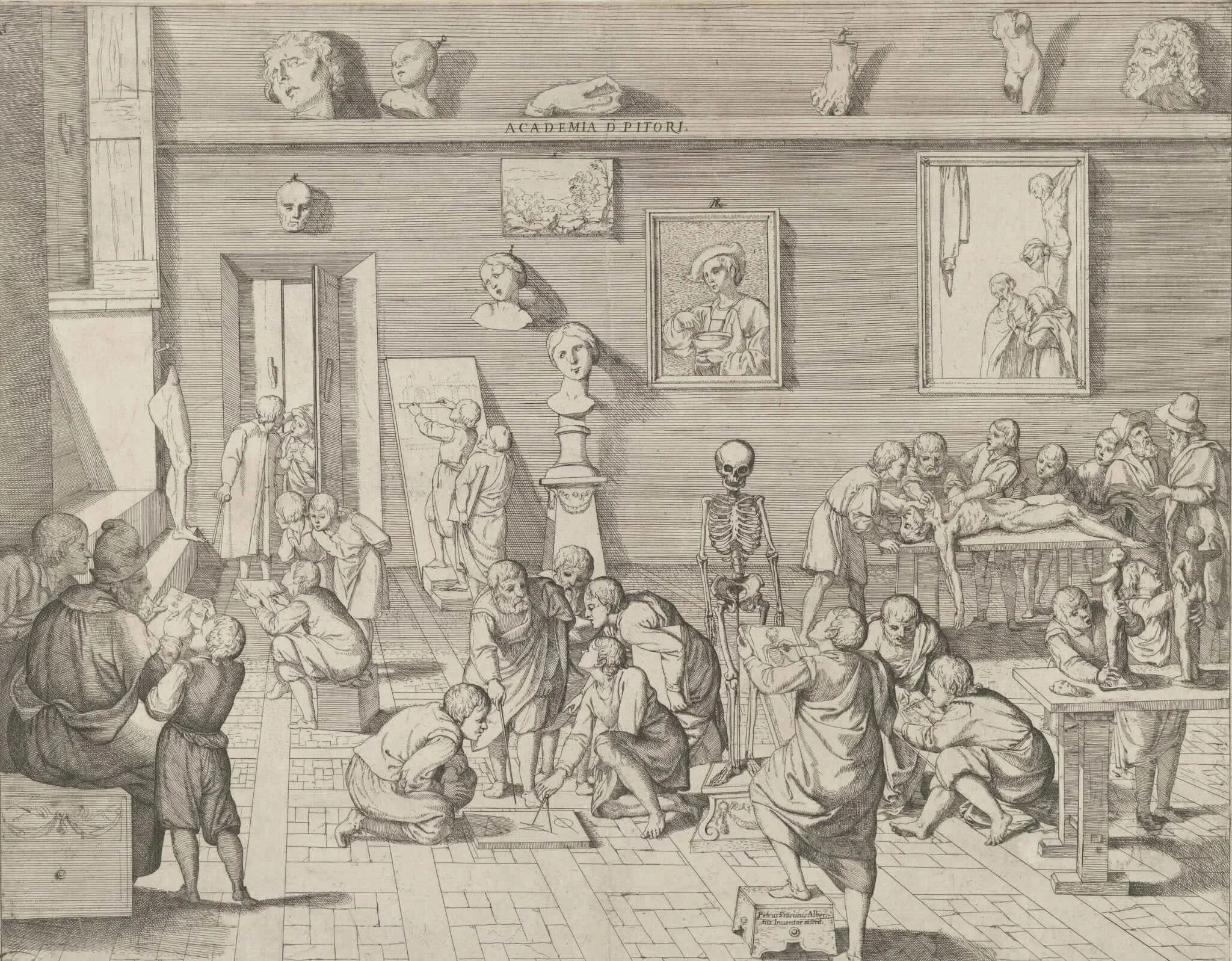
Pierfrancesco Alberti, An Academy of Painters, 1600–38. Etching, 41.2 x 52.2 cm., The Metropolitan Museum of Art. https://www.metmuseum.org/art/collection/search/369583
The English painters resented the situation bitterly, and the Painter-Stainers' Company attempted to protect their interests, without much success. But here the unfairness doubled back on itself in a way I find interesting. While stranger painters took the commissions worth having, they also faced restrictions on how they could set up in London. For all their prestige, they were hemmed in: they could not open a studio within the city walls (see the zoomable map below), and could not take on English apprentices. While the English painters couldn't reach the court, the stranger painter couldn't fully establish himself. Each was locked out of something the other had.
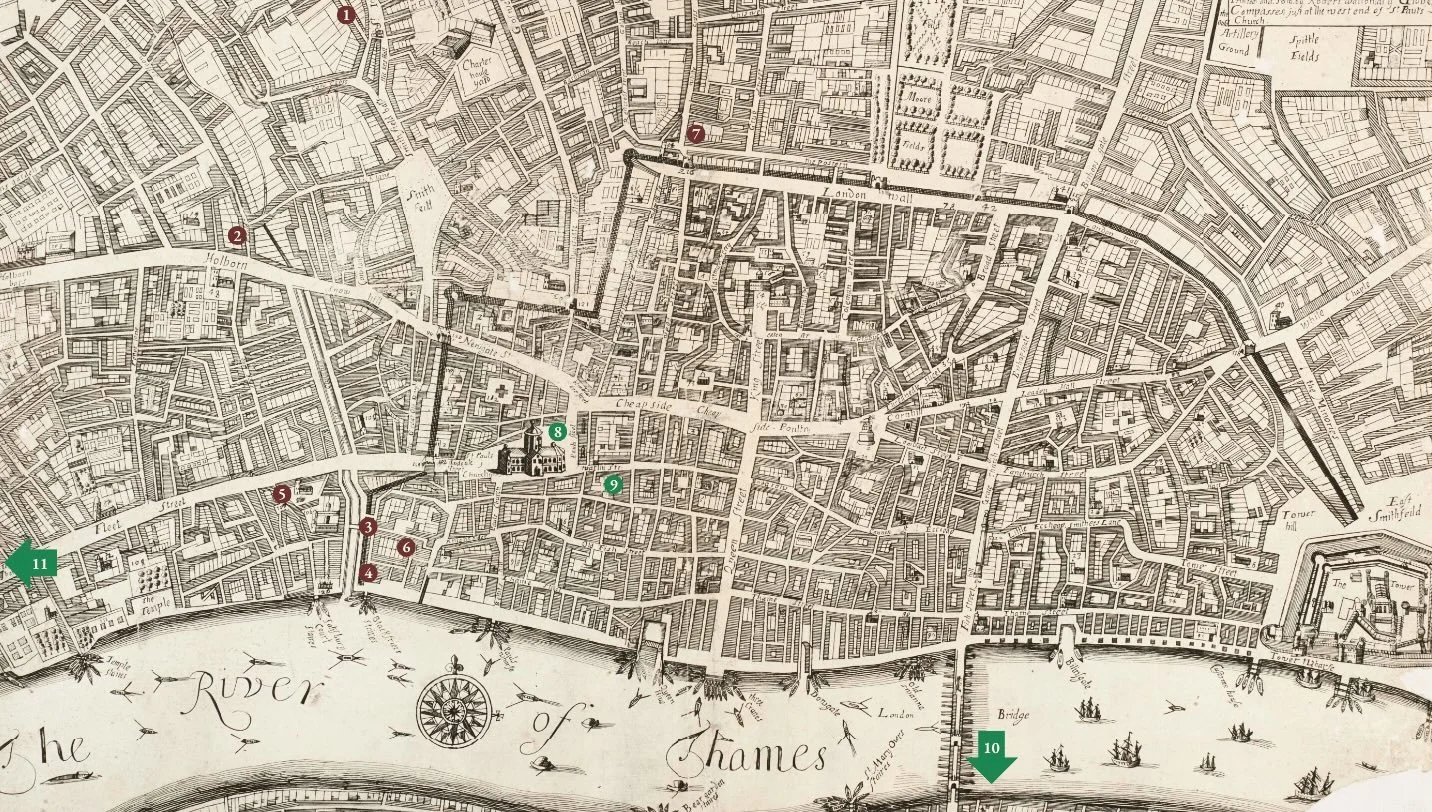
Zoomable Map of Stranger Painter’s Studios in 1641: from Robert Walton, England’s Glory, A new mapp of the City of London, 1676.
Click the image to zoom: https://srv2.zoomable.ca/viewer.php?i=img07ecec7988b0108a_Artist_Studio_Map#zoom=1.07289&x=0.50000&y=0.28358
Key to the map
1. Cornelius de Droocht’s Studio, 9 St John’s Square, Clerkenwell
2. The De Critz Family, St Andrew’s, Holborn
3. Cornelius Johnson, St Ann, Blackfriars
4. Sir Anthony Van Dyck, Blackfriars
5. Laurence Hilliard, St Bride, Fleet Street
6. Miniaturists’ quarter, St Ann, Blackfriars
7. Robert Streeter, St Giles, Cripplegate
8. St Paul’s Cathedral
9. Painter-Stainers’ Hall
10. London Bridge and the Way to Southwark
11. The Way to Whitehall Palace
This is the exact bind my two painters are caught in, and, crucially, it's what binds them to each other. Antonis is a gifted stranger painter with no legal standing. Henry is an English apprentice with the birthright his colleague lacks, but not the freedom to use his own gift. As Antonis puts it, with characteristic tactlessness: you have something you don't even want, while I have needed it ever since I moved here.
The truth, of course, was likely more nuanced than simple hostility, and that grey space, where resentment and dependence tangle together, is exactly where my novel lives. A real resolution to the plight of English painters and their status as portrait painters wouldn't arrive until the eighteenth century. Henry, you might say, was born a little too early.
The question this raises
Neither man made the rules. But it begs the question: how do you survive and thrive when it feels like the system is working against you? Should you rage at its injustice? Or do you find a gap, by any means possible, and make it work in your favour? I think most of us think about how to survive an unfair world, what that will cost, and how that will make you quietly complicit in the very system you resent. My characters choose the gap and run with it.
The part that fascinates me
This specific professional and societal structure was tempting to write about because it is a precise, well-documented bind that seemingly pitted talented painters against one another. But I would argue that an unspoken creative brotherhood readily acknowledged that each side was locked out of what it wanted.
As someone born abroad and having built my life in England, I found writing about surviving, adapting, and assimilating in a different society irresistible. While as an art historian, I could have written a non-fiction book about the guild, its regulations, and its conflicts with Charles I. But as a novelist, I got to do something far more enjoyable. I wrote about two men who need each other precisely because society pits them against one another, and I let them argue about it while grinding pigment and cleaning brushes.
