
The Man Who Put the Body in Print: Helkiah Crooke and the Scandal of English Anatomy
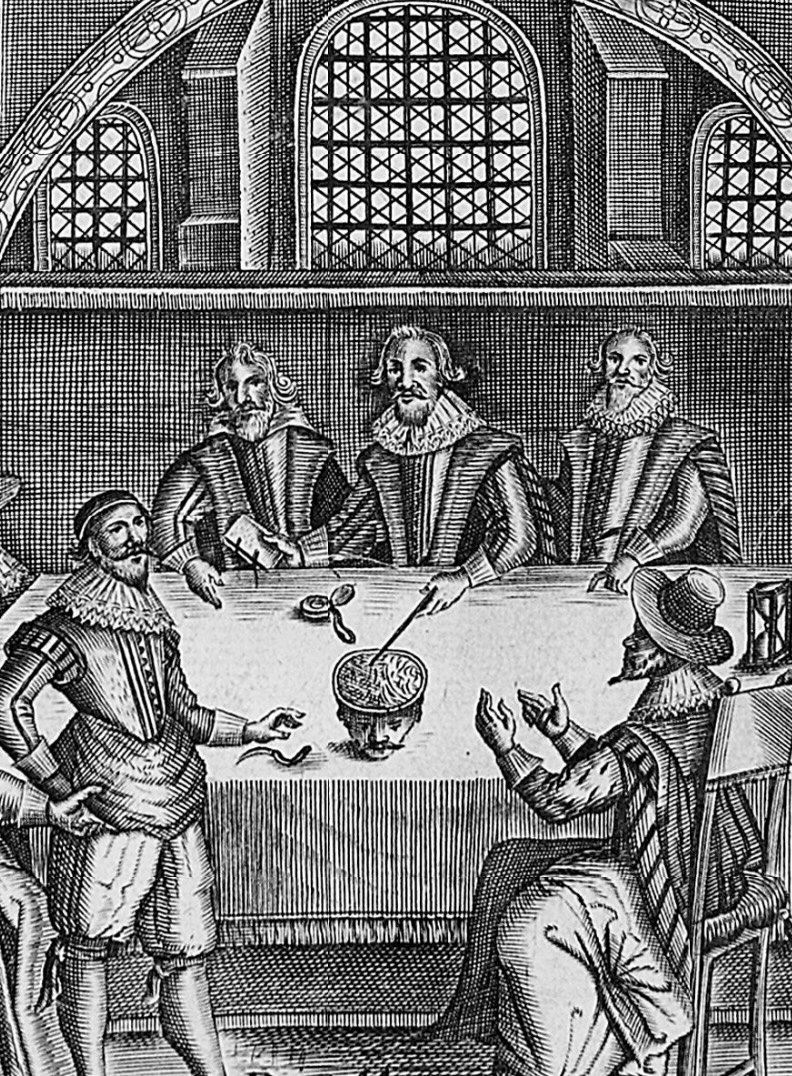
Helkiah Crooke was real, and he was trouble.
A physician and anatomist, he published, in 1615, a book called Mikrokosmographia — the first substantial anatomy of the human body written in English, rather than the scholarly Latin that kept such knowledge safely among gentlemen. He put the body — all of it, in detail, with illustrations — into a language ordinary literate people could read. The College of Physicians was appalled; there were attempts to suppress it, to burn the frankest sections, to stop a man from making the human interior public. He fell foul of the authorities more than once, and later ran the notorious Bethlem hospital — Bedlam — in circumstances that did his reputation no favours at all.
He is, in other words, exactly the sort of real historical figure a novelist prays to find: genuinely important, genuinely compromised, and genuinely inconvenient to the powerful. In Clouded in Clerkenwell I've made him a presence in my painters' world — a man whose professional hunger for anatomical knowledge, and whose need for material to study, makes him a very particular kind of neighbour to have. Everything about the historical man is true. What he does in my novel is mine.
A question worth sitting with
What interests me about Crooke is the bargain at the centre of him. He did something he believed was genuinely important — democratising knowledge of the body, dragging anatomy out of the Latin and into the light — and to do it he had to defy his institution, court disgrace, and, later, arguably compromise himself badly in other ways.
Which raises a question I find genuinely hard: how much of your principles, your standing, your clean hands, would you trade to do work you were certain mattered? Is a compromised man who achieves something important better, or worse, than a spotless one who achieves nothing? Crooke lived that question. So, in smaller and stranger ways, do my characters.
The part that fascinates me
The pleasure of writing historical fiction is precisely this seam — the place where a documented real person meets an invented situation, and you get to ask: what if this actual man, with these actual hungers, met these invented people?
Crooke is a gift for that, because the real him already contains the tension I need: brilliance and disrepute, public good and private compromise, all in one difficult figure. I didn't have to invent his moral complexity. History handed it to me. I just had to give him neighbours interesting enough to bring it out — and to be careful, always, to keep the true parts true and let the reader feel where the record ends and I begin.
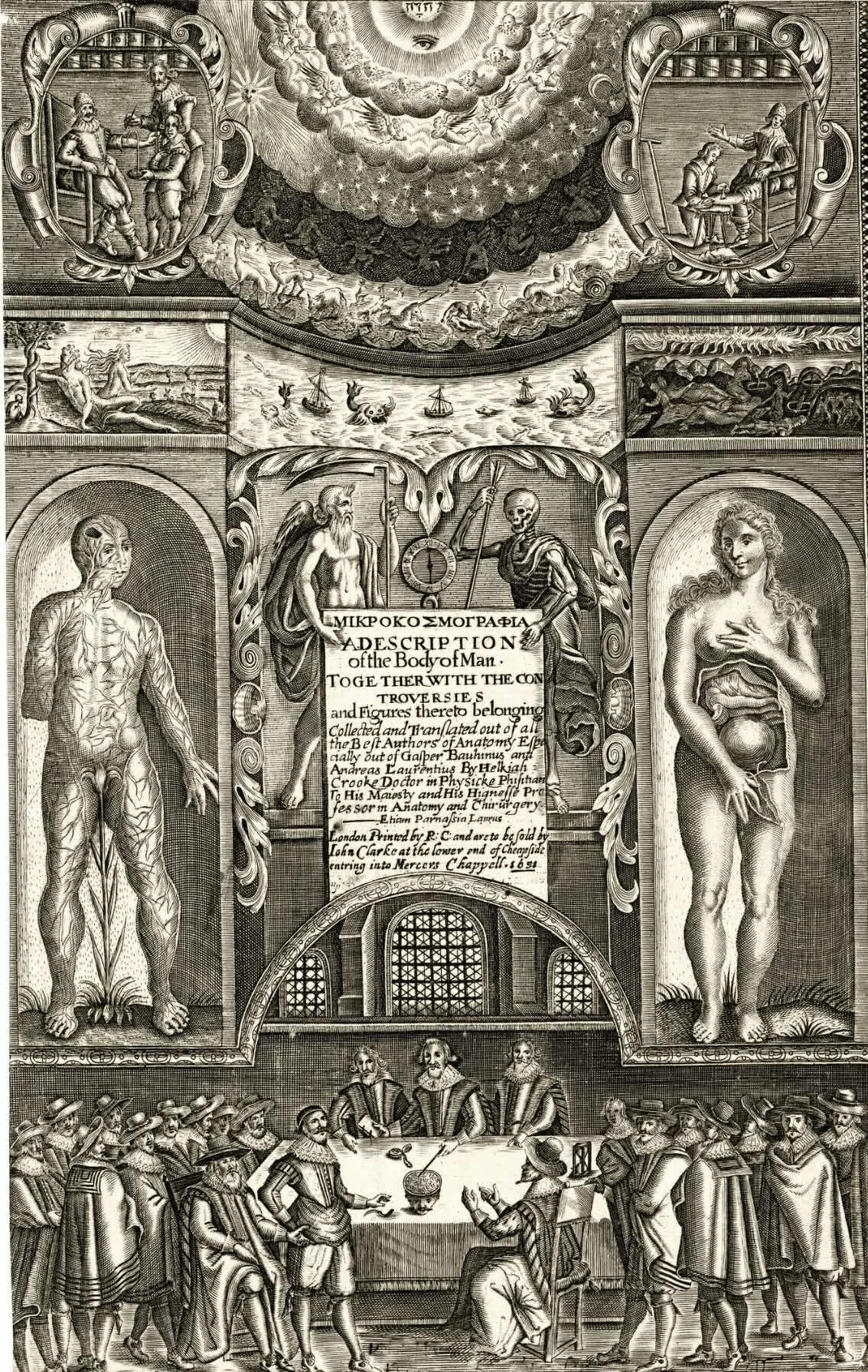
Martin Droeshout, frontispiece, from Mikrokosmographia: A Description of the Body of Man, second edition (London, R.C., sold by John Clarke, 1631), © The Trustees of the British Museum. Shared under a Creative Commons Attribution-NonCommercial-ShareAlike 4.0 International (CC BY-NC-SA 4.0) licence.
