
Cure or Poison: The Deadly Ambiguity of the Seventeenth-Century Apothecary
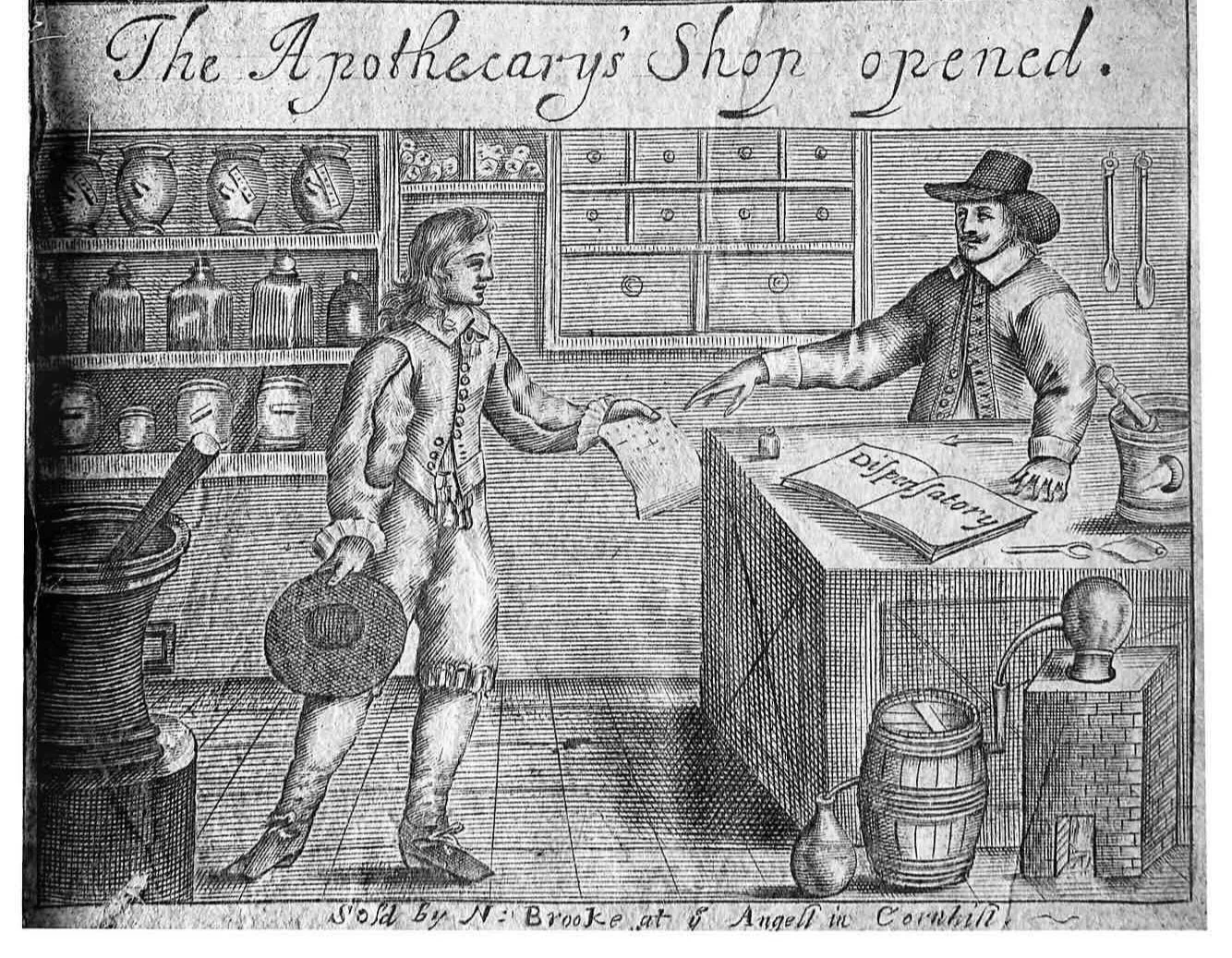
Frontispiece engraving from Morel, Pierre, The expert doctors dispensatory. The whole art of physick restored to practice..., 1646-77. Engraving. Wellcome Collection, Reference: WT/D/1/20/1/63/30.
The seventeenth-century apothecary's shop was a place of genuine wonder, and it should be said plainly that it was also a place where the line between medicine and murder was mostly a matter of dose.
The same shelves that held remedies held their darker cousins, because so many were the same substance in different quantities. Hellebore, prescribed for melancholy and madness, could kill you in slightly greater measure. Mercury, arsenic, antimony, opium, foxglove, deadly nightshade — the apothecary's cabinet was a pharmacy and a poisoner's larder at once, and the knowledge that separated healing from harm was precisely the knowledge that enabled harm. To know the cure was to know the killing dose.
What fascinates me is how available this knowledge was, and how quietly. You did not need a laboratory or a conspiracy. You needed an apothecary, a plausible complaint, and a steady enough manner. The means of doing something terrible sat on an ordinary shelf, in an ordinary shop, on an ordinary street — which is a genuinely unsettling thing to sit with, and exactly the sort of thing my characters find themselves sitting with.
A question worth sitting with
Here is what the apothecary's shelf makes me think about. When a harm can be done quietly — untraceably, deniably, with a substance that might just as easily have been a medicine — does it weigh any less on the person who does it? The world may never know. No one may ever prove it. You could, if you needed to, half-convince yourself it wasn't really you, or wasn't really murder, or wasn't really anything at all.
My novel is very interested in the wrongs that leave no mark and summon no punishment — and whether the guilt of them is real all the same, or whether a thing truly counts only if someone sees. I won't tell you where my characters land. But the shelf is where the question starts.
The part that fascinates me
I'll be honest that this is the sort of research that makes you slightly furtive — one does become aware, reading closely about historical poisons, that one is accumulating a very specific and faintly alarming body of knowledge. (I promise my interest is entirely professional.)
But the reason I went so deep isn't the mechanics of it. It's that the deniability is the whole moral engine. A poison that could be a medicine, a harm that could be an accident, a wrong with no witness — that's the exact grey zone where a decent person can do something terrible while never quite having to admit, even to themselves, that they've done it. That zone is where my narrator lives. The apothecary's shelf is just where it's stocked.
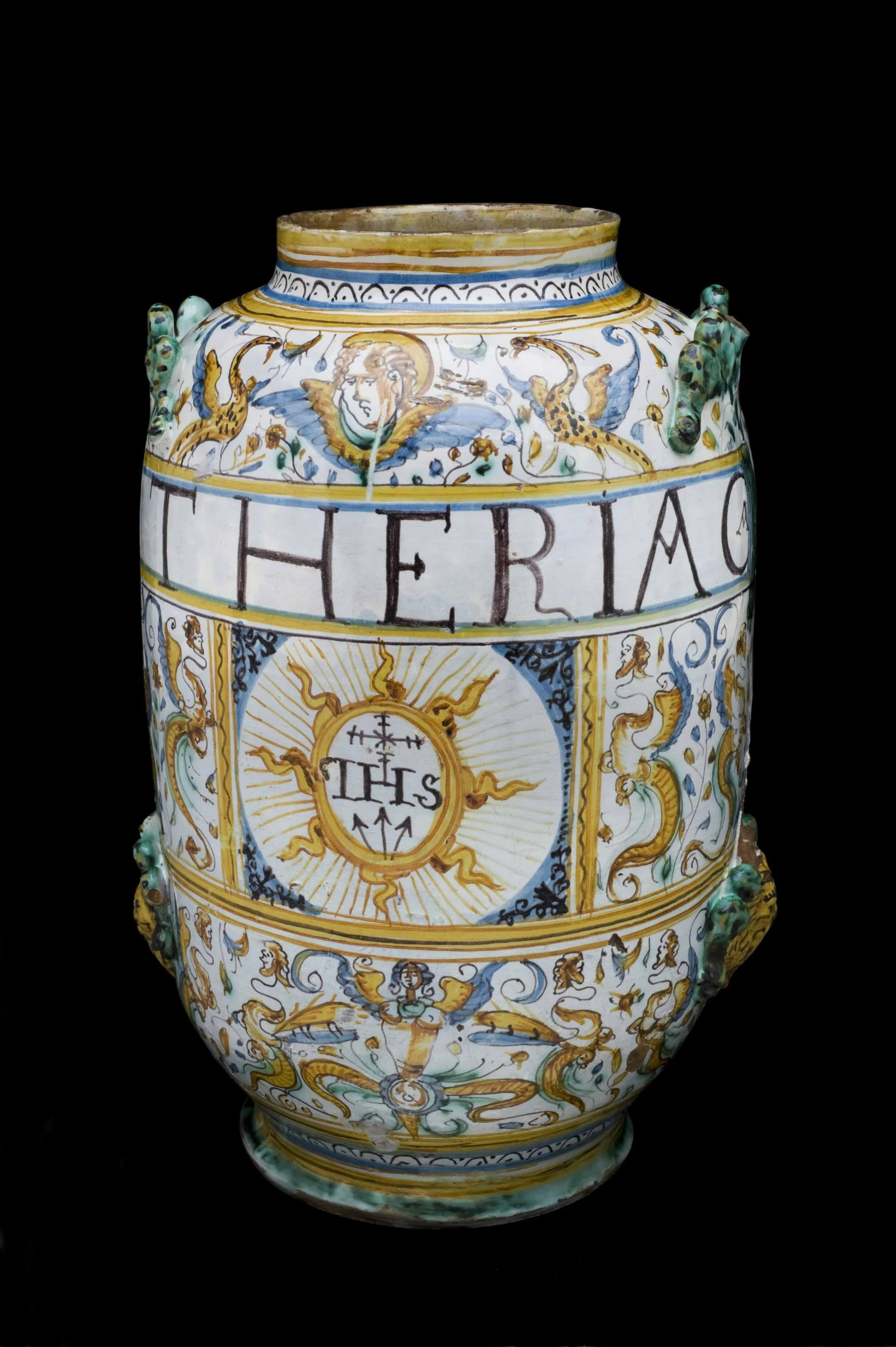
Theriac jar. Source: Wellcome Collection. Attribution-NonCommercial 4.0 International (CC BY-NC 4.0)By https://wellcomeimages.org/indexplus/obf_images/86/56/226de6d9b2e9668414aaad63a2fe.jpgGallery: https://wellcomeimages.org/indexplus/image/L0057175.htmlWellcome Collection gallery (2018-03-23): https://wellcomecollection.org/works/mevaswyt CC-BY-4.0, CC BY 4.0, https://commons.wikimedia.org/w/index.php?curid=36198398.
